Showing posts with label Tourism Marketing. Show all posts

Tuesday, 20 September 2016

AI-powered superhuman travel agents | The Lola way!


What do you get when you pair Artificial Intelligence with travel agents and customer service specialists? You get a more organic and convenient travel booking experience for both business and leisure travelers. Or Lola – the latest offering from Kayak co-founder Paul English’s stable.

Currently being touted as “an intelligent travel agent in your pocket” Lola is a Mobile-only application currently only available for iOS. An android version is planned soon. While it is only available in the USA as of now, forthcoming launches in 2016 include Australia, Canada and the UK. None of its features are available on the desktop.

This makes perfect sense in a rather intuitive way. Most travel research by digitally-savvy audiences, as we’ve seen in earlier posts, starts on mobile devices. Now when you add artificial intelligence, natural language processing and a hand-picked team of 15 travel agents and customer service representatives to curate and present content to you, you simply cannot fail!

I haven’t had the opportunity to review the App personally. However a detailed review by Business Insider (available here) offers a screen-by-screen explanation. The App seems to use messaging and filtration to determine the most suitable choices for an individual customer and throws back bespoke, non-touristy options for restaurants and things to see and do.

The App is currently available only through invitation – meaning only current users can invite others to try it out. This will be the case through 2016. Hopefully next year it will be available publicly though the grapevine says it is likely to be membership-based. Stay tuned for more!


Saturday, 10 September 2016

Religious Tourism | Religious diversity of India


One of the most compelling features that make India a haven for religious tourism is quite simply the number of religions that thrive here. Very few countries of the world can boast of such secular credentials. While Hinduism, Buddhism, Jainism and Sikhism can claim origins in India, non-Indian religions like Islam, Christianity, Judaism and Zoroastrianism continue to thrive here.

The tourist places featured here have not been selected on the basis of being the biggest or the most popular. Rather, they are a photo-essay representation of the diversity of religions that co-exist peacefully in this country.


Hinduism - The Tirupati Balaji Temple

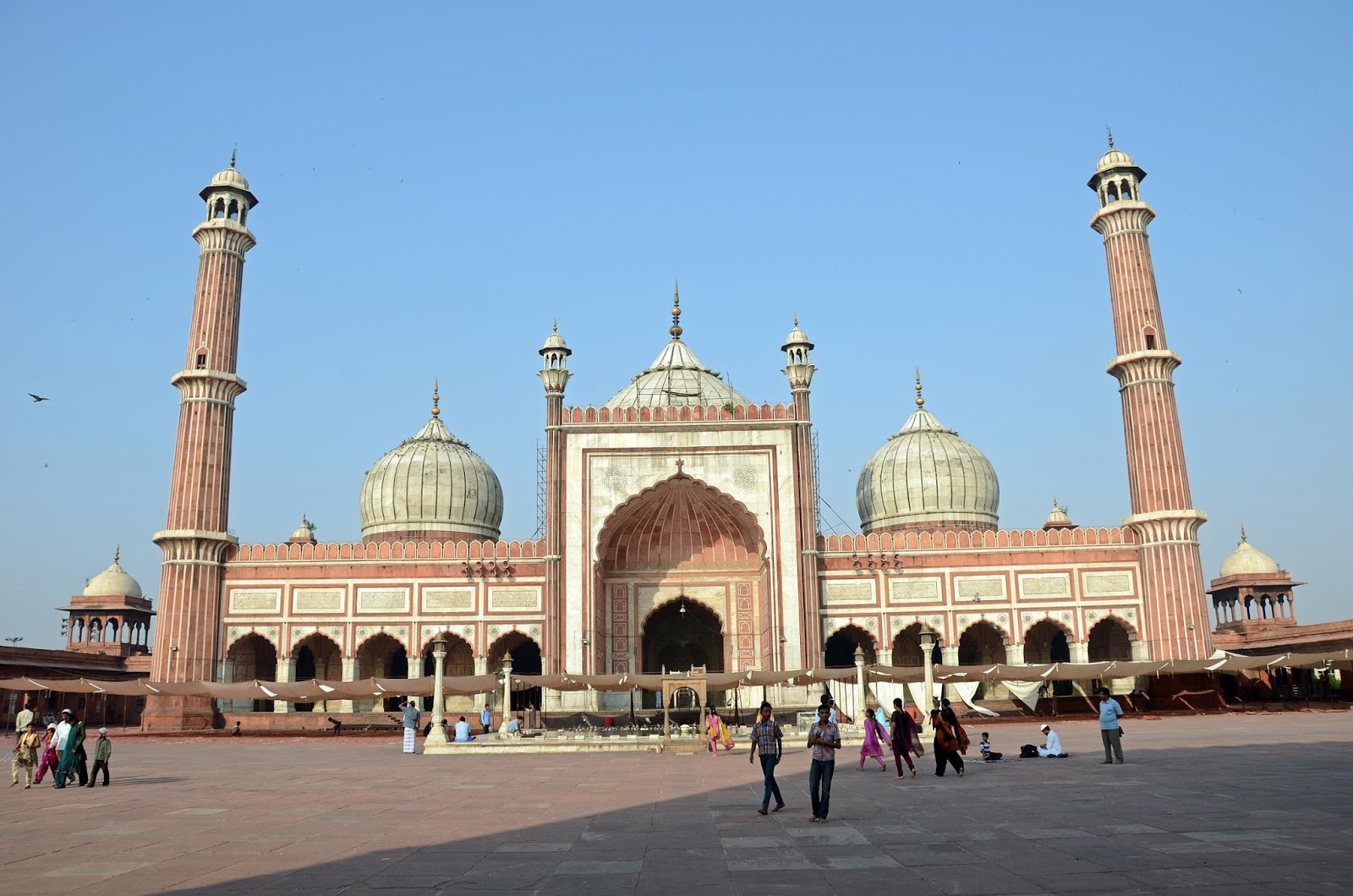
Islam - The Jama Masjid

Sikhism - The Golden Temple

Christianity - Basilica of Bom Jesus

Zoroastrianism - Ahura Mazda Fire Temple


Buddhism - Mahabodhi Temple
Jainism - Gomateshwara Temple

Judaism - Magen Aboth Synagogue

Chinese Buddhism - Kwan Kung Temple
There are a host of other religions that I'm sure I've missed. However that I attempt to address that lapse in forthcoming posts. Stay tuned!

Friday, 9 September 2016

Religious tourism in India | Some thoughts and observations

India, Religious Tourism, Hinduism, Islam, Sikhism

Back when I was a kid, my sibling and I dreaded the annual school holidays. While most families would escape to hill stations, foreign locations or other such interesting places, all we had to look forward to were trips centered-around religious destinations! Every annual vacation took the form of a pilgrimage to some remote yet popular (meaning crowded) temple or shrine. Several life stages and personal belief changes later, I may have become more mature about the experience. But back then, I can admit now, I hated the experience.

What is religious tourism anyway?
Religious tourism does not have to be place-of-worship specific. While the core motive can be the deity or monument, other aspects like art, culture, architecture and traditions could also be highlights. 

In a country like India, there are religions galore! While Hinduism, Sikhism, Buddhism and Jainism can claim credit of originating here, the country and it’s secular policy have ensured that non-Indian religions like Islam, Christianity, Judaism and Zoroastrianism (among others) have large followings and continue to thrive here. Add to this several other tribal and nature-worship religions and what you have is a smorgasbord of religious experience available nowhere else!

Kinds of Religious Tourism
Religious Tourism can be categorized into two distinct groups.

1. The Domestic Circuit
Given the population of a country like India and given the multiplicity of religions which thrive here, the domestic religious tourism market has always been a large sector. While religion is based on belief, in today’s world it is also a lucrative business. Typically, temples, mosques, churches and other religious locations are owned and managed by trusts. These trust need to find a way to monetize their location and continually generate income for maintenance, infrastructure development and upkeep. The domestic circuit plays an important role in this ecosystem.

2. The ‘Foreign’ Circuit
This essentially comprises people who belong to a different religion, region or country who come to India to primarily undertake religious tourism in India to experience the novelty value. Frankly, this is a compelling enough reason for the simple fact that several religions thrive here and are well-represented across the length and breadth of the country. The foreign circuit may or may not club religious tourism with destination travel.

In other posts, we will attempt to analyze the Religious Tourism Market in India in greater detail as well as look as some recent initiatives (Public and Private) that have given this sector a much-needed boost.


Thursday, 8 September 2016

The changing face of tourism digital marketing


There was a time when the digital strategy for Tourism industry started and stopped with price comparisons. Flights and Hotels largely led this. The lowest common denominator was identified and ‘booking engines’ emerged to help visitors to websites secure just that. If some marketers pushed the envelope a bit, they only did so to the extent of using re-marketing, whether on PPC or on display. That was it.

The emergence of social media on the scene thankfully changed all that. While a considerable portion of travelers still look for the cheapest option on their vacation experiences, growing niches are changing the dynamics of tourism digital marketing. There are all sorts of tourists out there – and they are demanding all sorts of customized experiences. From off-the-beaten-track getaways, to solo travelling; from adventure travel to bespoke luxury travel; from women-only groups to the resurrection of religious travel! The industry is changing as rapidly as the needs of the customers are.

The important factor is the changing behavior of the consumers. Access to smarter devices, the second screen syndrome and always on accessibility have changed how they consume and actively seek content. Content hence continues to remain a key criterion for marketers. The smart ones recognize that irrespective of how occupied people are with their devices, it is only a means to an end. The actual hook continues to remain quality content.

However brands and marketers are also waking up to another dimension. Savvy consumers are now asking brands questions like, “I have X number of vacation days this year. What options can you offer me?” (Not in so many words of course, but you get the idea!) Only brands that are geared to respond with suitable options will be able to engage with consumers. Irrespective of where and when it happens, this is the one compelling differentiator that will segregate the survivors from the also-rans!

In a multi-channel, multi-device world, this is only getting more difficult. Not only does the marketer have to deliver the freshest (often predictive) content to consumers, they have to do so in a coherent manner across touch-points. The customer is looking for similar information – irrespective of the channel they use to get it. But trying to replicate content on all channels may not help present it in the best possible way.

The way out is what has come to be known as cascading content. A larger piece of useful content for a channel that attracts more time and attention, to snappier versions for more quick-interaction channels like mobile and social media. This way customers get what they want, the brand doesn’t repeat itself across channels and the industry as a whole matures and evolves. Till the next big disruption arrives on the horizon!


Wednesday, 7 September 2016

Always-on travelers demand always-on services

Hotel Indigo, a division of Intercontinental hotels

It is a well known fact that people research the place they are about to visit before they actually set off on the trip. Increasingly, travelers are looking for non-touristy destination activities to enhance their travel experience. This is where companies like Airbnb have stepped in to cater to a previously unmet need.

Airbnb realized a while ago that people are hooked to their smart devices. In almost all cases, these smart devices are Wi-Fi-enabled. So when you have smart travelers walking around the destination with smarter devices, constantly looking for and researching local options, it made perfect sense to deliver what they wanted! Hence, the Airbnb Local Travel Guides. Initially seeded by the Airbnb team, these travel guides soon harnessed the power of crowdsourced content to result in unique destination activities options – with Airbnb cleverly included at the heart of it all! Big win for everyone all around!

Today, these user-curated lists have become the go-to destination for all travel aficionados. Hotels, which have been watching services like Airbnb warily from the sidelines, were not slow to step-up their game in this area. Hotel Indigo, a division of the Intercontinental Hotels Group, launched something called Neighbourhood Guides a while ago. It is an interesting step in the right direction.

A proprietary offering, the interactive Neighbourhood Guides are only available at Hotel Indigo Hotels. They offer complete details about the Hotel Indigo chain of hotel properties, great neighbourhood stories, the city hotel team’s recommendations of unique and interesting local attractions as well as access to a photo-sharing tool linked to Facebook and other photo sharing networks. This gives the guests access to great, curated lists of local activities which are not biased in favor of the hotel itself. Rather, they actually end-up enhancing the guest travel experience prompting many to re-consider other Hotel Indigo properties for their next holiday experience.

The interactive Neighbourhood Guide experience is also available on the Hotel Indigo Mobile site. So even those travelers who aren’t actual guests of Hotel Indigo can access and use the information to enhance their travel experience. This has actually expanded the scope and freed-up what was the traditional service of the old concierge at the Hotel lobby. After all, happy guests and visitors make for assured return guests!


Friday, 2 September 2016

Small Budget Marketing Magic! LateRooms style...

While most marketers think that a large marketing budget is required to make an impact on social media channels, some new age companies have been doing just the opposite. A great example is a recent campaign by LateRooms. The strategy was simple. How to get customers to make a lot of noise on your behalf on social media? The answer did not require a big budget or even big data.

All it took was some old school detective work to discover the attitudes, opinions or interests of customers who had recently made a booking. Post that (either after they reached their destination or returned home from the trip) these users were surprised with simple, yet customized gifts that delighted them! The result? More than enough noise across various social media channels and best of all, using your customers as die-hard advocates for your brand!

I especially like the way the campaign was delivered. Rather than using a boring, stodgy tone of voice and officialese, LateRooms created a "Magic Making Department" whose job it was to scope guests and send out the gratification. Check out the personalized letter included with each thoughtful gift.


You can also see Sarah's response here.

The idea itself is not new. Years ago, KLM did something very similar when they snooped around to discover passenger likes and interests to select random guests who got personalized and highly relevant gifts at the airport gate. The fact that the campaign is still remembered speaks volumes about the efficacy of this low-key marketing strategy.